

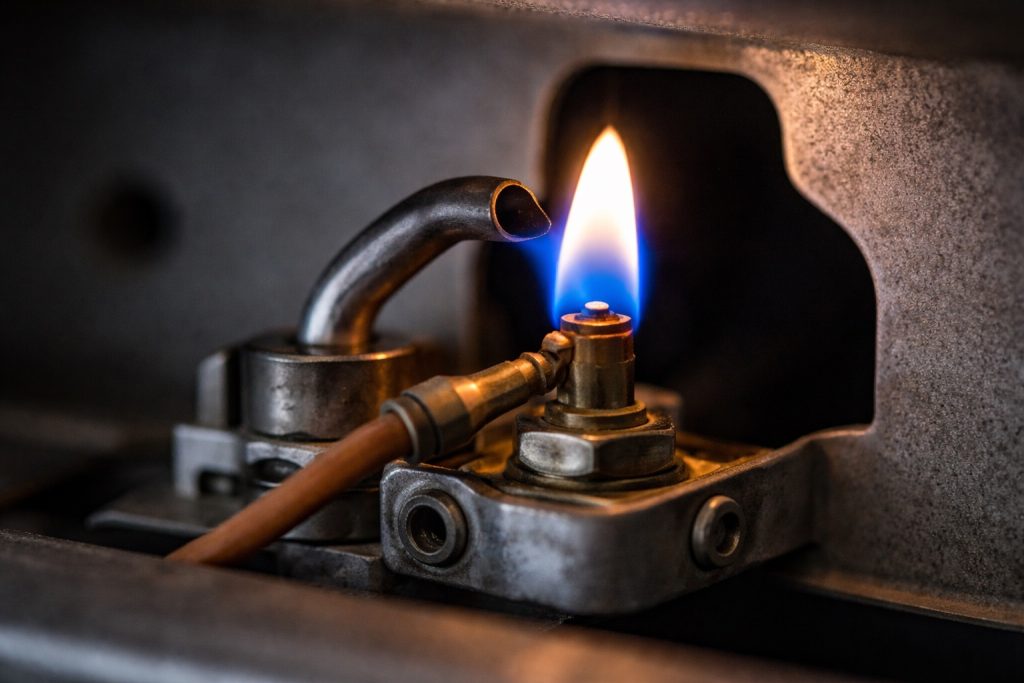
If your water heater pilot light won’t stay lit, you’re probably dealing with cold showers and a growing sense of frustration. It’s one of the most common gas water heater issues homeowners run into.
The good news is that a pilot light that keeps going out doesn’t always mean you need a full replacement. In many cases, it’s a fixable issue.
What the Pilot Light of Gas Water Heater Actually Does
In a gas water heater, the pilot light is a small flame that ignites the main burner when the tank needs to heat water. If that flame goes out, the burner can’t turn on, which means no hot water.
Modern systems include safety features that automatically shut off the gas supply if the pilot light isn’t detected. So when your pilot won’t stay lit, the system is usually preventing a larger safety issue.
Common Reasons the Pilot Light Won’t Stay Lit
One of the most frequent causes for pilot light of a gas water heater to keep blinking or not stay lit is a faulty thermocouple. The thermocouple is a small sensor that detects whether the pilot flame is on. If it doesn’t sense heat, it shuts off the gas as a safety measure. Over time, thermocouples can wear out, become dirty, or shift out of position. In San Antonio homes with older units, this is often the culprit.
A dirty pilot tube is another common issue. Dust, debris, or even corrosion can partially block the gas flow. When that happens, the flame may be weak or inconsistent, making it difficult for the pilot to remain lit.
Gas control valve problems are less common but more serious. If the valve isn’t regulating gas properly, the pilot may light temporarily and then shut off again. This type of repair typically requires professional service.
Air drafts can also play a role. If your water heater is located in a garage or attic, which is common in San Antonio homes, airflow from open doors or ventilation systems can sometimes blow out the flame.
In some cases, sediment buildup inside the tank can cause overheating. San Antonio’s hard water contributes to mineral deposits forming at the bottom of the tank. As sediment thickens, it forces the burner to work harder, which can eventually affect internal components connected to pilot operation.
Can You Relight It Yourself?
If you’re comfortable following manufacturer instructions, you can try relighting the pilot light. Most units have instructions printed directly on the tank. You’ll typically turn the gas control knob to “pilot,” hold it down while igniting the flame, and continue holding it for about 30–60 seconds before releasing.
If the pilot lights but won’t stay on after releasing the button, that often points to a thermocouple issue.
However, if you smell gas, hear unusual noises, or feel unsure at any point, it’s best to stop and contact a licensed HVAC technician in San Antonio. Gas appliances aren’t something to experiment with.
What It Costs to Fix a Pilot Light in San Antonio
Repair costs depend on the underlying problem and the age of the system. In the San Antonio area, replacing a thermocouple typically runs between $150 and $350. Cleaning out the pilot assembly or minor adjustments may fall on the lower end of that range.
If the issue involves the gas control valve, costs can range from $300 to $600. In older units, sometimes replacing the valve isn’t cost-effective compared to installing a new water heater.
If your system is more than 10–12 years old and experiencing repeated pilot issues, it may be worth evaluating whether repair makes financial sense. A new standard gas tank water heater in San Antonio generally ranges from $1,500 to $3,500 installed, depending on size and code requirements.
Signs It’s More Than Just the Pilot Light
Sometimes what looks like a pilot problem is actually a bigger system issue. If you notice rusty water, leaking around the base of the tank, loud rumbling noises, or inconsistent heating even when the pilot stays lit, the internal components may be deteriorating.
Frequent pilot outages combined with rising energy bills can also indicate that the unit is struggling to operate efficiently.
Preventing Future Pilot Light Problems
Routine maintenance of gas water heater goes a long way. Flushing the tank annually helps remove sediment that can affect heating performance. Having a professional inspect the burner assembly and gas connections every year or two can also catch small issues before they turn into no-hot-water emergencies.
In areas like San Antonio where hard water is a factor, installing a water softener can significantly reduce mineral buildup and extend the life of your water heater.
If your pilot light keeps going out, it’s not something to ignore. While the fix is often straightforward, repeated shutdowns are a sign the system needs attention. A quick inspection can restore your hot water and prevent a small repair from turning into a full replacement.