


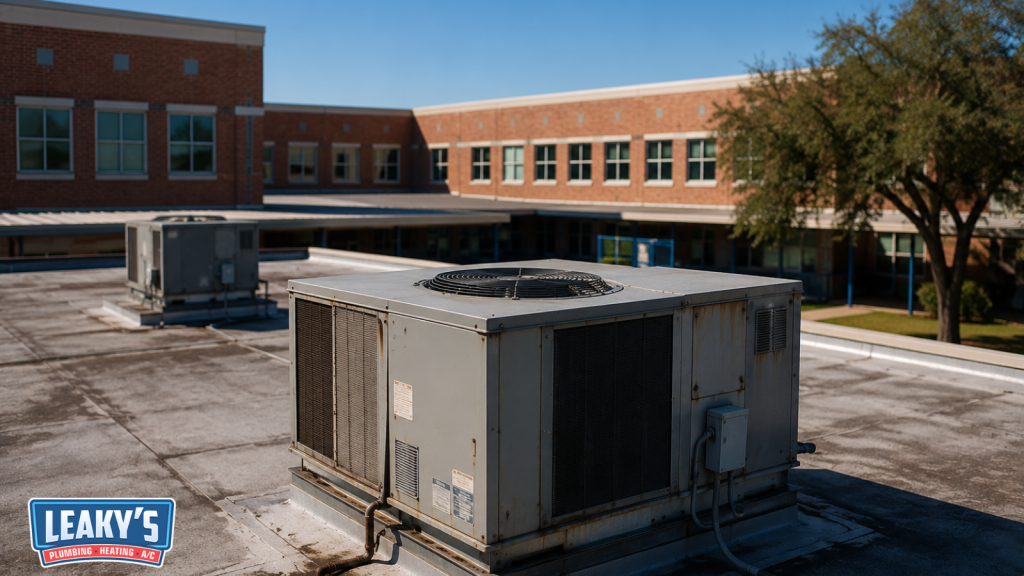
In a city like San Antonio, where temperatures can soar for much of the year and sudden cold fronts aren’t uncommon, it’s extremely important to have a fully-functional HVAC system. Yet across the area, many campuses continue to struggle with heating and cooling issues that disrupt learning, frustrate teachers, and concern parents.
Over the past few years, HVAC problems in local school districts including SAISD have repeatedly made the news. Reports of overheated classrooms, temporary system shutdowns, and aging infrastructure highlight a challenge faced not just by schools, but by many large facilities across South Texas. What can these schools do to ensure their systems are always working without causing an inconvenience to teachers and students?
Aging HVAC Systems Struggling to Keep Up
One of the most common issues in San Antonio schools is the age of existing HVAC equipment. Many campuses rely on systems that were installed decades ago, long before today’s efficiency standards or current classroom demands. As units age, they lose their ability to cool evenly, break down more often, and consume far more energy than necessary.
In San Antonio’s long, hot summers, these older systems are pushed to their limits. The result is frequent repairs, uneven temperatures from one classroom to another, and rising utility costs that strain already tight school budgets. While some upgrades have been funded through bonds, replacing every outdated unit across a large district takes time — and in the meantime, maintenance becomes critical.
How to fix it:
Upgrade HVAC units to modern, energy-efficient systems — cutting long-term maintenance needs and improving performance. Schools exploring AC Installation in San Antonio options can benefit from newer systems built specifically for Texas heat.
Schedule seasonal tune-ups to catch small problems before they become major issues.
Install smart thermostats and zoned controls to optimize comfort and efficiency.
Uneven Temperatures Across Classrooms
A frequent complaint from teachers and students is that some rooms feel too warm while others are uncomfortably cold. This problem often isn’t just about the HVAC unit itself, but about how air is distributed throughout the building. Poor duct design, clogged filters, dirty coils, or systems that were never properly balanced can all lead to inconsistent temperatures.
When airflow isn’t evenly distributed, classrooms at the end of a duct run or on upper floors often suffer the most.
Solution steps:
Duct balancing and servicing — ensuring air flows reliably to all areas.
Routine filter and coil cleaning — improving airflow and system efficiency.
Professional HVAC diagnostics to spot underlying issues.
Breakdowns During Extreme Weather
Extreme weather events expose weaknesses in HVAC systems faster than anything else. San Antonio schools have faced cooling failures during late summer heat waves and heating issues during winter cold snaps, sometimes forcing schedule changes or temporary closures.
These breakdowns often happen because systems weren’t fully prepared for the upcoming season. Without pre-season inspections and preventive maintenance, small issues such as worn components or low refrigerant can quickly turn into major failures when temperatures spike or drop suddenly.
How to fix it:
Weather-ready maintenance plans scheduled before each season. Consistent AC Repair and Maintenance in San Antonio keeps systems running reliably when it matters most.
Emergency response plans that include quick service and backup cooling/heating options.
Upgrading to more robust, weather-resilient HVAC models designed for Texas weather extremes.
Deferred Maintenance and Budget Pressures
Budget constraints play a major role in school HVAC problems. When funding is limited, routine maintenance is often postponed, and equipment is pushed well beyond its intended lifespan. While this approach may save money in the short term, it almost always leads to higher costs down the road through emergency repairs, energy waste, and system downtime.
Preventive maintenance is far less expensive than reactive fixes, yet it’s frequently overlooked. Over time, deferred maintenance compounds problems and increases the likelihood of sudden, disruptive system failures during the school year.
Fix it the smart way:
Preventive maintenance contracts with consistent service schedules.
Energy audits to target upgrades that bring the biggest ROI.
Phased replacement strategies — spreading upgrades over time without crippling budgets.
Limited Monitoring and Control Technology
Another challenge many schools face is the lack of modern HVAC monitoring and control systems. Without real-time insight into how equipment is performing, facilities teams often don’t know there’s a problem until classrooms become uncomfortable.
Modern HVAC control technology allows systems to be monitored remotely, adjusted by zone, and flagged when performance drops. Without these tools, identifying and fixing issues becomes reactive rather than proactive and that delay can mean days of discomfort for students and staff. Poor air circulation also affects student health and focus Indoor Air Quality Services in San Antonio can help schools stay ahead of air quality concerns that often go undetected.How to fix it:
Smart sensors and HVAC monitoring systems that alert staff to issues early.
Building automation systems (BAS) to manage zones independently.
Remote troubleshooting tools that reduce the need for emergency service calls.
How These Problems Can Be Fixed
The good news is that most HVAC issues in schools are preventable with the right approach. Regular inspections, seasonal maintenance, and gradual system upgrades can dramatically improve performance and reliability. Improving airflow through duct balancing and cleaning often resolves uneven temperatures, while upgrading controls and thermostats gives staff better visibility and control over building comfort.
For schools working within tight budgets, phased upgrades and preventive maintenance plans are often the most practical solution. Addressing the most critical systems first while maintaining the rest helps avoid large-scale failures and spreads costs over time.
Supporting Comfortable Learning Environments in San Antonio
Reliable HVAC systems are essential to creating safe, comfortable learning environments — especially in a climate like San Antonio’s. Whether it’s addressing aging equipment, preparing systems for extreme weather, or improving temperature consistency across classrooms, proactive HVAC care makes a measurable difference.
At Leaky’s HVAC and Plumbing, we understand the unique challenges local schools face. Our HVAC Services in San Antonio are designed to help educational facilities improve system reliability, reduce energy costs, and keep classrooms comfortable year-round.
If you’re responsible for maintaining a school facility — or simply want to learn more about how HVAC impacts learning environments — contact us today to schedule an assessment. Together, we can help ensure every classroom stays comfortable, no matter what the Texas weather brings.