
If you have ever tried to attempt a DIY pipe replacement project, you would have probably heard about “FIP”, one of the most common acronyms in the plumbing industry. Knowing what it means can help you identify the issue and fix it.
What Does FIP Mean for a Plumber?
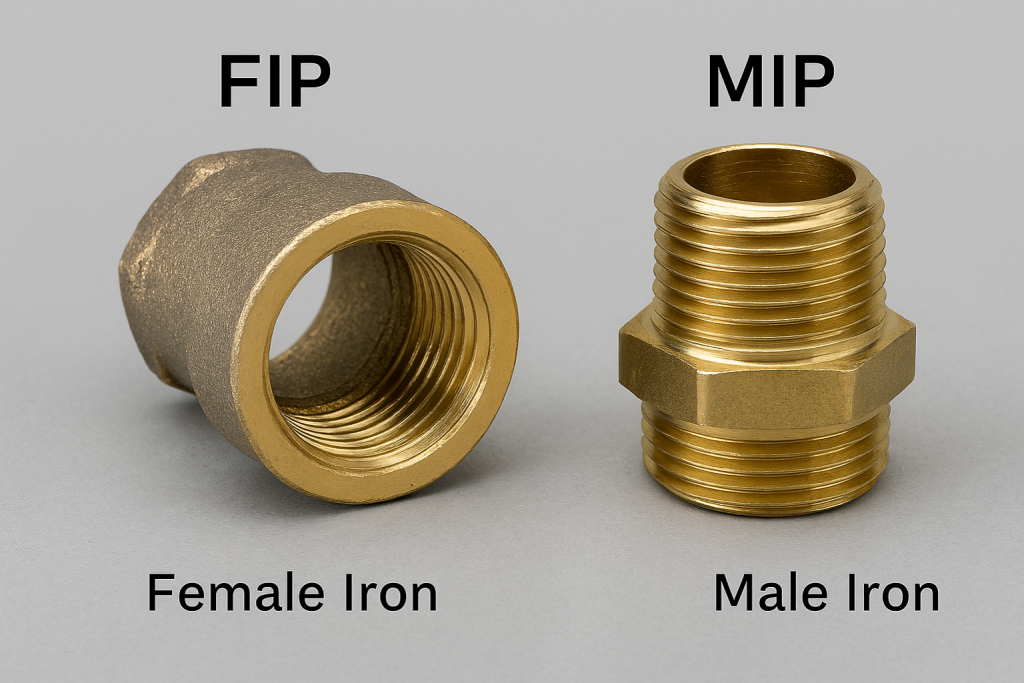
FIP means “female iron pipe”, a type of pipe fitting that has internal threading. Sometimes you would even come across FPT – female pipe thread, if the material isn’t iron.
Threads are the ridges found on the interior or exterior of the pipe end. These ridges allow you to attach one pipe to another. The designs have peaks (crests), valleys (roots), and an area called the flank in between.
In case of an FIP, threads will always be on the inside of the fitting.
FIP vs MIP
Next thing to note is MIP, “male iron pipes”, these pipes have exterior threading where internal threads of a FIP get attached to. Additionally, similar to FIP, MIPs are sometimes called MPTs when the material isn’t iron.
The exterior thread of an MIP fits into the interior thread of an FIP. A lot of licensed plumbers use plumbers’ tape to secure MIP threads before attaching two pipes. This technique fills in any gaps to prevent leaks.
These pipe fittings are common for connecting gas lines to heaters, dryers, and washing machines. It’s extremely important to get the sizing right so as to prevent gas leaks and other hazards.
Some Other Common Plumbing Acronyms
FIP and MIP are two of the most common plumbing acronyms. However, there are a few others to keep in your vocabulary to understand what a plumber says when they come to your house or you get into a mood to undertake a DIY plumbing project.
- FGH: Female garden hose, with internal threading
- MGH: Male garden hose, with external threading
- FCM: Female compression with internal threading used to create a plumbing network
- NPT: National pipe tapered thread
- NPS: National pipe straight
- UNS: Unified special thread, the standard fitting for screws, nuts, and bolts
If it anytime feels overwhelming, trust an expert and give us a call.
At Leaky’s HVAC and Plumbing, you would never be cheated, our expert, licensed plumbers will always give you the best advice. Call us today in either Lubbock or San Antonio to schedule your plumbing appointment.
{ “@context”: “https://schema.org”, “@type”: “FAQPage”, “mainEntity”: [ { “@type”: “Question”, “name”: “What does FIP mean in plumbing?”, “acceptedAnswer”: { “@type”: “Answer”, “text”: “FIP stands for Female Iron Pipe. It is a type of plumbing fitting that has internal threads, allowing it to connect to pipes or fittings with external (male) threads.” } }, { “@type”: “Question”, “name”: “What does FIP mean for a plumber?”, “acceptedAnswer”: { “@type”: “Answer”, “text”: “For plumbers, FIP refers to a female iron pipe fitting with threads on the inside. These internal threads allow the fitting to attach to a male-threaded pipe, commonly used in plumbing and gas line connections.” } }, { “@type”: “Question”, “name”: “What is the difference between FIP and FPT?”, “acceptedAnswer”: { “@type”: “Answer”, “text”: “FIP means Female Iron Pipe, while FPT means Female Pipe Thread. Both refer to fittings with internal threads, but FPT is used when the material is not iron.” } }, { “@type”: “Question”, “name”: “What is the difference between FIP and MIP?”, “acceptedAnswer”: { “@type”: “Answer”, “text”: “FIP fittings have internal threads, while MIP (Male Iron Pipe) fittings have external threads. An MIP fitting screws into an FIP fitting to create a secure connection.” } }, { “@type”: “Question”, “name”: “What does MIP or MPT mean in plumbing?”, “acceptedAnswer”: { “@type”: “Answer”, “text”: “MIP stands for Male Iron Pipe and has external threads. When the material is not iron, it may be called MPT, which stands for Male Pipe Thread.” } }, { “@type”: “Question”, “name”: “Why do plumbers use plumber’s tape on MIP threads?”, “acceptedAnswer”: { “@type”: “Answer”, “text”: “Plumbers use plumber’s tape on MIP threads to fill small gaps between threads, creating a tighter seal and helping prevent leaks.” } }, { “@type”: “Question”, “name”: “Where are FIP and MIP fittings commonly used?”, “acceptedAnswer”: { “@type”: “Answer”, “text”: “FIP and MIP fittings are commonly used for connecting gas lines to appliances such as heaters, dryers, and washing machines.” } }, { “@type”: “Question”, “name”: “Why is correct sizing important for FIP and MIP fittings?”, “acceptedAnswer”: { “@type”: “Answer”, “text”: “Correct sizing is critical to ensure a proper seal and prevent leaks, especially when working with gas lines where improper fittings can cause serious safety hazards.” } }, { “@type”: “Question”, “name”: “What are some other common plumbing acronyms?”, “acceptedAnswer”: { “@type”: “Answer”, “text”: “Other common plumbing acronyms include FGH (Female Garden Hose), MGH (Male Garden Hose), FCM (Female Compression), NPT (National Pipe Tapered Thread), NPS (National Pipe Straight), and UNS (Unified Special Thread).” } }, { “@type”: “Question”, “name”: “When should I call a professional plumber?”, “acceptedAnswer”: { “@type”: “Answer”, “text”: “If plumbing terms or repairs feel overwhelming, it’s best to trust a licensed professional plumber to ensure the job is done safely and correctly.” } } ] }- By Saba
- No Comments
