


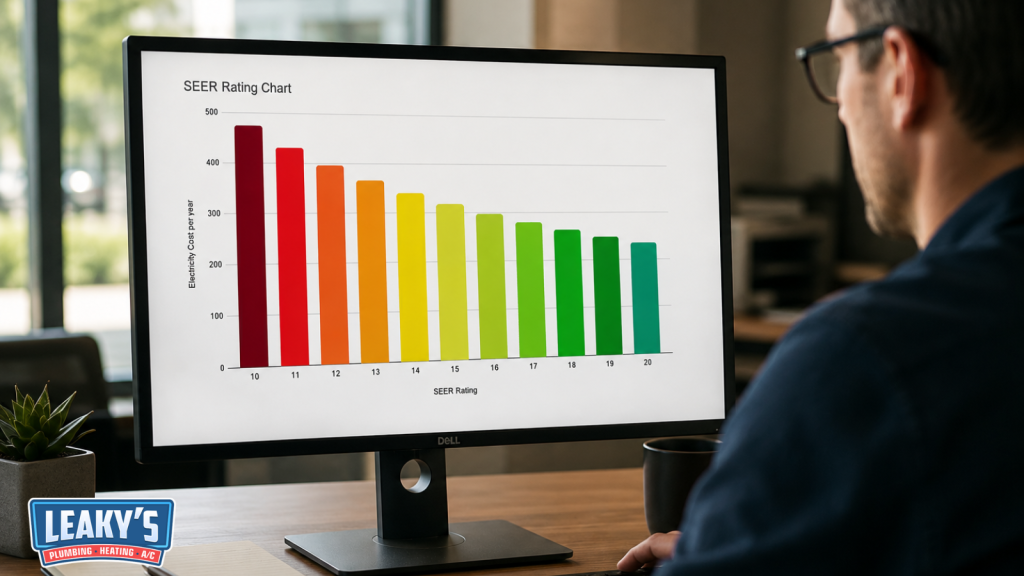
SEER stands for Seasonal Energy Efficiency Ratio. It is a standardized rating that measures how efficiently an air conditioning system operates over an entire cooling season. The higher the SEER rating, the more efficiently the system converts electricity into cooling.
If you are shopping for a new air conditioning system, then you need to be familiar with what SEER means. In a state like Texas, where air conditioners run for much of the year, understanding SEER is especially important. It directly affects energy use, monthly utility bills, and long-term operating costs and plays a major role when planning a new installation. If you are already comparing systems or thinking about a replacement, our AC installation in San Antonio team can walk you through the right SEER rating for your home and budget.
How SEER Is Calculated
SEER is calculated by dividing the total cooling output of an air conditioner over a typical cooling season by the total electrical energy it consumes during that same period. The result is expressed as a ratio rather than a unit of measurement.
In simple terms, a higher SEER number means you get more cooling for each unit of electricity used. For example, a 16 SEER system is more energy efficient than a 14 SEER system, assuming both are properly installed and maintained through routine HVAC maintenance.
It is important to note that SEER reflects seasonal performance, not peak performance on the hottest day of the year. It accounts for varying temperatures and usage patterns throughout a cooling season.
Minimum SEER Requirements in Texas
Texas falls within the southern region of the United States for HVAC efficiency standards. Federal regulations set minimum SEER requirements based on climate zones.
Because Texas experiences long, hot summers, the minimum SEER rating for new central air conditioners installed in the southern region is higher than in cooler parts of the country. These standards are periodically updated by the U.S. Department of Energy, so homeowners replacing an older unit may find that new systems are required to meet higher efficiency thresholds than when their previous unit was installed.
In a climate where air conditioners can run from early spring through late fall, choosing a higher SEER rating can significantly reduce annual cooling costs.
Why SEER Matters More in Texas
In many parts of Texas, including cities like Houston, Dallas, Austin, and San Antonio, summer temperatures regularly exceed 90 degrees, so you are bound to use the air conditioner almost always, except in a few winter months.
Because cooling demand is high for much of the year, the efficiency of your system plays a major role in:
• Monthly electricity bills
• Overall home energy consumption
• Long term system wear and tear
A higher SEER unit typically costs more upfront. However, in Texas, the extended cooling season often allows homeowners to recover that investment over time through lower utility bills.
SEER vs. Real World Performance
While SEER is a useful comparison tool, actual efficiency depends on several additional factors. Proper installation, ductwork condition, insulation levels, and routine maintenance all influence how efficiently a system operates.
For example, even a high SEER unit can underperform if ductwork leaks cooled air into an attic or crawl space. In many Texas homes, especially older properties, duct leakage and insufficient attic insulation can significantly reduce system efficiency. This is where professional duct cleaning in San Antonio and ductwork inspection become an important part of system performance catching leaks before they quietly chip away at your SEER-rated efficiency.
That means SEER should be considered alongside a broader assessment of the home’s HVAC system, not as the only deciding factor.
Choosing the Right SEER Rating
The best SEER rating for a Texas home depends on several factors, including:
Home size
Local climate conditions
Budget
Length of time you plan to stay in the home
For homeowners planning to stay long term, investing in a higher SEER system may offer greater savings over time. For rental properties or short term ownership, meeting the minimum requirement may be more cost effective.
A licensed HVAC professional can perform a load calculation to determine the appropriate system size and efficiency level for your specific home. Oversizing or undersizing a unit can reduce efficiency and comfort, regardless of SEER rating. Our AC installation in Lubbock team handles these load assessments as a standard part of every installation, ensuring the system is sized and rated correctly for your home from day one.
SEER2 and Updated Standards
In recent years, the industry has transitioned to a new testing standard known as SEER2. This updated rating system uses more rigorous testing conditions that better reflect real world performance, including external static pressure from ductwork.
While SEER and SEER2 numbers are not directly interchangeable, both serve the same purpose: helping consumers compare energy efficiency between systems.
For Texas homeowners, understanding these ratings ensures compliance with current regulations and supports informed purchasing decisions when considering AC replacement.
Beyond Equipment Efficiency
High SEER equipment is only part of an efficient cooling strategy. In Texas, where extreme heat places heavy demand on HVAC systems, other factors can make a measurable difference:
Sealing duct leaks
Improving attic insulation
Installing programmable or smart thermostats
Scheduling regular maintenance
Addressing these areas can enhance the performance of any air conditioning system, regardless of its SEER rating. Our AC repair and maintenance in Lubbock team can help with seasonal tune-ups, duct checks, and system inspections to make sure your equipment is actually running at its rated efficiency not just on paper.
If you would like to know about what SEER rating your unit has or what should be the rating when buying a new AC unit, do not hesitate to call at Leaky’s, we would be happy to give advice without charging you for it.