


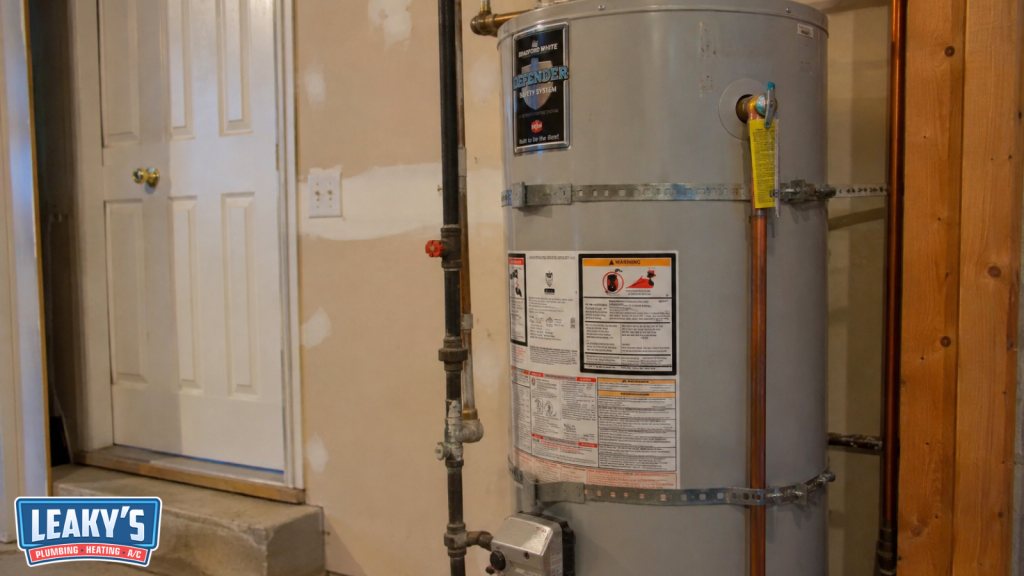
You’re standing in the kitchen and you hear it through the wall – a series of pops, like popcorn in a microwave, coming from the water heater closet. Or maybe it’s more of a low rumble, almost like something’s boiling in there. Either way, it’s not a noise a water heater is supposed to make, and it doesn’t mean you need to panic. It does mean the tank is trying to tell you something.
Quick Answer: What’s Causing the Noise
In most cases, popping or rumbling from a water heater means one thing: sediment buildup at the bottom of the tank.
- Popping/cracking sounds – water trapped under a layer of sediment, boiling and escaping through it
- Rumbling/gurgling – thicker sediment buildup restricting water movement inside the tank
- Banging on startup – sediment shifting as the burner or heating element kicks on
- Whistling or hissing – usually a pressure or valve issue, not sediment
- Popping that’s gotten louder over months – a sign the buildup is getting worse, not better
The sound itself isn’t usually an emergency. What it signals – a tank working harder than it should – is worth addressing before it turns into a bigger repair.
What’s Actually Happening Inside the Tank
Sediment Buildup Is the Most Common Cause
Every tank water heater collects mineral sediment over time, especially in areas with hard water. That sediment settles at the bottom of the tank, right where the burner or lower heating element sits. As the water heats up, pockets of it get trapped underneath the sediment layer. That trapped water boils, pushes up through the sediment, and escapes as small bursts of steam – which is exactly what that popping sound is.
The more sediment builds up, the more that pattern repeats, and the louder and more frequent the noise gets.
It Makes the Water Heater Work Harder
Sediment doesn’t just cause noise. It acts as an insulating layer between the burner and the water, so the unit has to run longer and burn more fuel (or use more electricity) to heat the same amount of water. That’s often the quiet cost behind a noisy tank – a slowly climbing utility bill that doesn’t have an obvious explanation.
Less Commonly, It’s a Valve or Pressure Issue
Not every strange sound is sediment. A whistling or high-pitched sound is more often linked to the pressure relief valve or an issue with water pressure than to buildup. That’s a different kind of problem and one worth having a plumber look at directly rather than guessing.
How to Tell Which Noise You’re Dealing With
Not every sound means the same thing, and knowing which one you’re hearing helps you gauge how urgent it is.
A series of pops or cracks almost always points to sediment buildup – the classic sign it’s time for a flush, not an emergency. A steady rumble or gurgle usually means that the sediment layer has gotten thicker, and the tank is working harder to move water through it. A bang right as the burner or element kicks on is typically sediment shifting at the bottom of the tank as heating starts.
A whistle or hiss is a different animal. That one’s more often tied to the pressure relief valve or water pressure than to sediment, and it’s worth having checked sooner rather than later. A soft tick as the tank cools down, on the other hand, is completely normal – that’s just metal expanding and contracting, and it doesn’t need any attention at all.
Is It Dangerous? When to Turn the Water Heater Off
Popping and rumbling on their own are not dangerous – they’re a maintenance signal, not a safety emergency. Plenty of homeowners live with a noisy tank for months before addressing it. That said, a few signs mean it’s time to shut off the water heater and call for service the same day rather than scheduling it for later:
- Hissing or a whistling sound combined with visible water pooling near the base
- The pressure relief valve is actively releasing water or steam
- The tank feels hot to the touch on the outside, not just warm
- The noise is suddenly much louder than it’s been
Those signs point toward pressure buildup or tank stress, which isn’t something to wait out.
Why This Is More Common in San Antonio and Lubbock
Hard water is the main reason sediment builds up faster here than it does in a lot of other parts of the country. San Antonio’s water is notably mineral-heavy, and Lubbock’s groundwater tends to run hard as well, which means tanks in both service areas collect sediment faster than a water heater would in a softer-water region. A water heater that might go five or six years before making noise elsewhere can start popping in two or three here without regular flushing.
Can You Fix It Yourself, or Is It Time to Call a Plumber?
A yearly tank flush can slow sediment buildup significantly, and it’s a reasonable DIY task for homeowners comfortable shutting off and draining a water heater. But once popping has been going on for a while, flushing doesn’t always clear it completely – sediment can harden, and a flush alone won’t undo months of insulating buildup.
As a rough guide: a tank water heater under 6 years old with new noise is usually a good candidate for a flush and a checkup. A tank past 8 to 10 years old that’s rumbling and recovering hot water more slowly than it used to is often closer to the end of its useful life, where repeated flushing stops being worth it compared to a water heater installation in San Antonio or Lubbock.
About Leaky’s
Leaky’s Plumbing, Heating & A/C handles water heaters, leaks, and HVAC for homeowners across both San Antonio and Lubbock – tank and tankless water heaters alike, in San Antonio or Lubbock. If a noisy tank turns out to be more than sediment, the same visit can also flag anything else worth knowing before it becomes a bigger problem, like an early-stage leak nearby in San Antonio or Lubbock.
How to Prevent the Noise From Coming Back
Sediment buildup isn’t really preventable long-term, but it is manageable. A few habits go a long way in a hard-water market like San Antonio or Lubbock:
- Flush the tank yearly. This is the single biggest factor in keeping sediment from building up enough to cause noise or efficiency loss.
- Consider a water softener. Softened water dramatically slows how fast minerals settle at the bottom of the tank, in both San Antonio and Lubbock homes.
- Avoid setting the temperature higher than necessary. Higher temperatures speed up mineral buildup inside the tank.
- Don’t skip the first flush. A tank that’s gone years without one tends to develop sediment fastest, since nothing has ever cleared it out.
What Happens If You Just Let It Keep Popping
Ignoring the noise doesn’t usually cause a sudden failure, but it does wear the tank down over time. Efficiency drops as sediment insulates the burner, hot water recovery gets slower, and the extra strain shortens how many years the unit realistically has left. A tank that’s been popping for two years is, in a real sense, further down that road than one that just started last week – even at the same age. Catching it early usually means a simple flush. Catching it late usually means a repair call, or a new tank sooner than it should’ve needed one.
Not Sure If It’s a Flush or a Replacement?
A noisy tank doesn’t always mean it’s time to buy a new one, but it’s worth an honest look before the sound turns into a bigger repair. Leaky’s can flush it, check the valve, and tell you straight whether it’s a quick fix or time to talk options.